
Understanding Anxiety
Updated: Apr 6
What is Anxiety?
Everyone feels anxious sometimes. It can happen before a big test or during a stressful event. But for some people, anxiety takes over their thoughts and does not go away. When worry and fear become so strong that they impact daily activities, it may be an anxiety disorder.
Anxiety disorders are one of the most common mental health conditions [1]. The good news is that anxiety disorders are treatable, and most people can get better with the right help [1].
What Causes Anxiety Disorders?
There is usually no single reason why someone develops anxiety [2]. Think of it like a recipe: several different ingredients come together to create the final result.
It might run in your family [2]. If your parents, siblings, or other close relatives have struggled with anxiety, you might be more likely to experience it too. This doesn't mean you're destined to have anxiety, it just means you may be more sensitive to it, like how some families are more prone to allergies or diabetes.
Life experiences shape us [2]. Difficult experiences can sometimes trigger anxiety. This could be something major like losing a loved one, going through a divorce, or experiencing trauma. But it can also be long-term stress, like financial worries, relationship problems, or work pressure.
Your physical health matters [2]. Sometimes anxiety is your body's way of telling you something else is going on. Health problems like heart disease, thyroid issues, or chronic pain, can cause or worsen anxiety. This is why it's important for your doctor to check your overall health.
What you eat and drink can play a role [3]. That extra cup of coffee may be making you more anxious than you think. Some people are more sensitive to caffeine. Drinking too much alcohol, certain medications, or using drugs can also make anxiety worse.
Remember: Figuring out what may have played a part in your anxiety isn't about blame, it's about finding the best way to help you feel better. You didn't choose to have anxiety, and it's not your fault.
Common Types of Anxiety Disorders
Generalized Anxiety Disorder (GAD)
GAD involves excessive worry about many different things: work, health, family, finances, or even minor matters like being late for appointments. People with GAD find it hard to control their worry, and it occurs more days than not for at least six months [1].
Social Anxiety Disorder
This is a strong fear or worry of social events where you might be judged by others. People with social anxiety tend to avoid parties, meetings, or even daily activities like shopping [1]. When they need to be in these types of situations, they are usually very uncomfortable.
Panic Disorder
Panic disorder is sudden, strong episodes of fear called panic attacks. These attacks come on quickly and include symptoms such as a racing heart, shortness of breath, dizziness, and chest pain [1]. Some panic attacks happen randomly, while others happen due to a trigger.
Specific Phobias
Specific phobias are strong fears of certain things such as heights, flying, spiders, or medical procedures.
What Does Anxiety Feel Like?
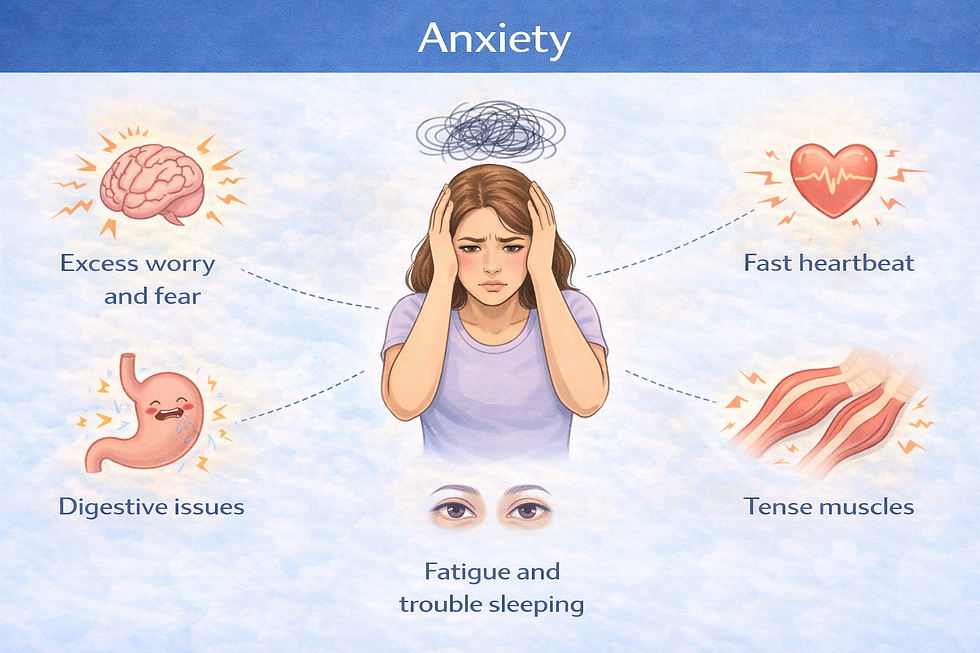
Anxiety affects both your mind and body. Common symptoms include: [1]
Mental and Emotional Symptoms
Excessive worry that's hard to control
Feeling nervous, restless, or on edge
Difficulty concentrating or your mind going blank
Irritability
Fears about social situations or specific triggers
Physical Symptoms
Rapid heartbeat or palpitations
Shortness of breath
Dizziness or lightheadedness
Muscle tension
Fatigue or feeling easily tired
Sleep problems
Stomach upset
It's important to know that having these symptoms once in a while does not mean you definitely have an anxiety disorder. The difference is in how severe and frequent the symptoms are, and if they get in the way of your work, relationships, or daily activities [2].
How is Anxiety Treated?
Anxiety can be treated with therapy and medication [1]. Many people feel best when they use both together.
Cognitive Behavioural Therapy (CBT)
CBT is a type of talk therapy for anxiety [1]. It usually includes 8-20 weekly sessions with a therapist. With help, you learn ways to manage anxiety.
CBT can help you:
See how your thoughts, feelings, and actions are linked
Identify negative thoughts
Learn how to change these thoughts
Face situations that make you anxious [2]
Many people feel better after CBT. The skills you learn can help you manage anxiety in the future.
Medications
Common medications include:
SSRIs, such as sertraline (Zoloft) and escitalopram (Lexapro)
SNRIs, such as venlafaxine (Effexor)
These medications often take 2-4 weeks to start working. Some people can have side effects at first. These often improve with time. Your doctor can help you find the right medicine if they think that it may help you.
Other Ways to Help Anxiety
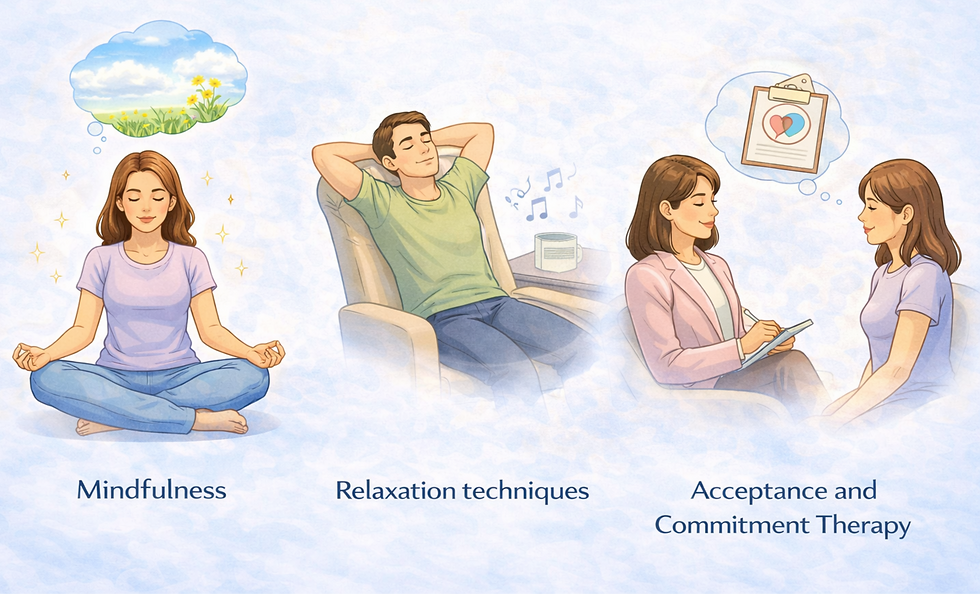
Mindfulness: Mindfulness teaches you to focus on the present. Breathing exercises and meditation can help calm your mind.
Relaxation: Breathing strategies and muscle relaxation exercises can help your body feel calmer.
Acceptance and Commitment Therapy (ACT): ACT teaches people to notice thoughts and feelings of anxiety without fighting them. It also helps people focus on what matters most to them.
What Can You Do on Your Own?
While treatment is often necessary for anxiety disorders, certain lifestyle changes can help recovery:
Exercise regularly. Physical activity can reduce anxiety symptoms [1,4-5]. Start with something you enjoy, even if it's just a daily walk, and slowly increase as you feel comfortable.
Build good sleep habits. Keep a regular sleep schedule, avoid screens before bedtime, and create a relaxing bedtime routine [5].
Cut back on caffeine and alcohol. Both can make anxiety worse [5-6]. Some people use alcohol to cope with anxiety, but your body/mind may get used to needing it and this can make anxiety worse over time.
Learn about anxiety. Getting information from trusted sources helps you understand what you're going through and what options are available [5].
Don't avoid things that make you anxious. Avoidance brings short-term relief but makes anxiety worse in the long run [2]. Facing feared situations gradually, even in small steps, is a key part of recovery.
When to Seek Medical Advice
If anxiety is making it hard to work, keep up with relationships, or manage daily tasks, it may be time to talk to a healthcare provider [1]. You are not alone, and help is available. Many people with anxiety feel better with the right treatment.
Your family doctor may ask you some simple questions or have you fill out a short questionnaire to check for anxiety. They can then talk with you about treatment options [1]. This may include medication, therapy (talking with a mental health professional), or both.
If you ever have thoughts about harming yourself, get help right away. You can call a crisis hotline or go to the nearest emergency department.
The Bottom Line
Anxiety disorders are real medical conditions. They are not a sign of weakness, and they are not something you can simply “get over" [2].
Anxiety is very common, and it is also very treatable [7]. With the right treatment, such as therapy, medication, or both, many people feel much better and are able to take back control of their lives [1,4].
If you think you may have an anxiety disorder, the most important step is to reach out for help. Talk to your doctor or another healthcare provider.Treatments are available, and support is out there.
Sources:
Szuhany KL, Simon NM. Anxiety disorders. JAMA. 2022 Dec 27;328(24):2431. doi:10.1001/jama.2022.22744
Penninx BW, Pine DS, Holmes EA, Reif A. Anxiety disorders. The Lancet. 2021 Mar;397(10277):914–27. doi:10.1016/s0140-6736(21)00359-7
Ferré S, O’Brien MC. Alcohol and caffeine: The perfect storm. Journal of Caffeine Research. 2011 Sept;1(3):153–62. doi:10.1089/jcr.2011.0017
O’Connor EA, Henninger ML, Perdue LA, Coppola EL, Thomas RG, Gaynes BN. Anxiety screening. JAMA. 2023 Jun 27;329(24):2171. doi:10.1001/jama.2023.6369
Stein MB, Sareen J. Generalized anxiety disorder. New England Journal of Medicine. 2015 Nov 19;373(21):2059–68. doi:10.1056/nejmcp1502514
Sarris J, Moylan S, Camfield DA, Pase MP, Mischoulon D, Berk M, et al. Complementary medicine, exercise, meditation, diet, and lifestyle modification for anxiety disorders: A review of current evidence. Evidence-Based Complementary and Alternative Medicine. 2012;2012:1–20. doi:10.1155/2012/809653
Craske MG, Stein MB. Anxiety. The Lancet. 2016 Dec;388(10063):3048–59. doi:10.1016/s0140-6736(16)30381-6
Walter HJ, Bukstein OG, Abright AR, Keable H, Ramtekkar U, Ripperger-Suhler J, et al. Clinical practice guideline for the assessment and treatment of children and adolescents with anxiety disorders. Journal of the American Academy of Child & Adolescent Psychiatry. 2020 Oct;59(10):1107–24. doi:10.1016/j.jaac.2020.05.005
Are you still confused or do you still have questions?
Medical Disclaimer: HealthDecoded content is for education only and does not replace professional medical advice. Always seek guidance from a qualified healthcare provider.
© HealthDecoded. All content is original and protected by copyright. Reproduction or distribution without permission is not permitted.